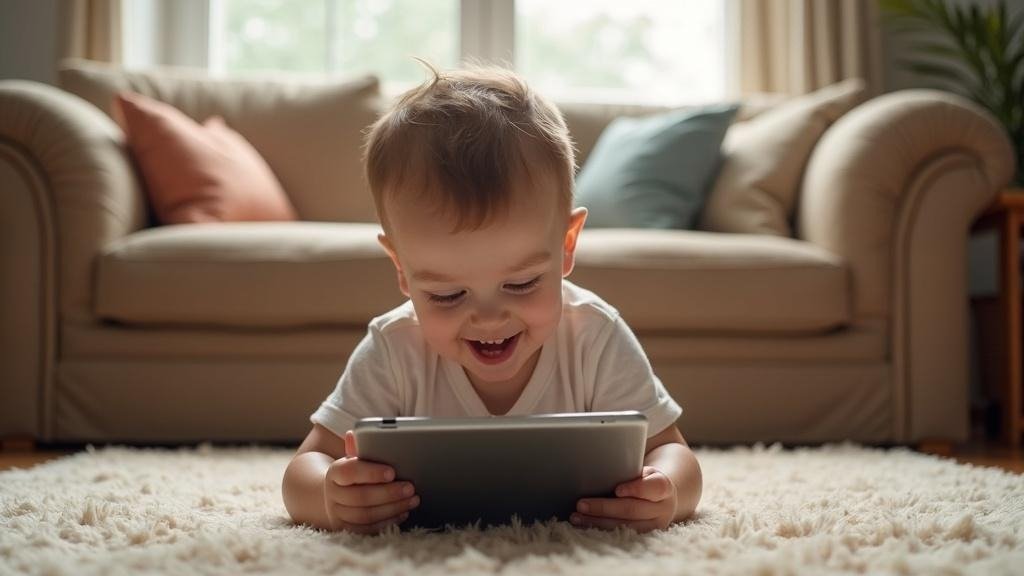
Most parents shopping for speech practice apps get sold on the idea that more activities equals better results. It does not. A child who closes an app after 90 seconds has gotten nothing from its 1,500 exercises. The apps that work are the ones a kid actually finishes, and that distinction shapes this whole list.
What I Looked At
Criteria used here: age-appropriateness (roughly 2 to 10), whether the experience holds a child’s attention without a parent hovering, quality of parent-facing feedback, suitability for neurodivergent learners, transparent pricing, and honest limitations. None of these apps is a medical treatment. A one-liner worth repeating early: if a licensed speech-language pathologist has already assessed your child, any app on this list should supplement that relationship, not replace it.
The 10 Picks
1. Little Words
The thing most drill apps skip entirely is the emotional state of the kid before the session starts. Little Words opens with a mood check, and its AI companion Buddy genuinely adjusts his pacing and energy based on the answer. A child who is already wound up gets a softer, quieter Buddy. That single design decision separates this app from nearly everything else in the category.
Buddy remembers the child’s name, preferred topics, and which target sounds the parent has flagged (s, r, l, sh, th and others), then works those sounds into actual back-and-forth conversation across themed worlds like Space, Ocean, and Dinosaurs. There is no reading, no typing, no menus to tap through. The child just talks. That voice-first structure means pre-readers and kids who shut down at text-heavy screens can actually use it without a parent coaching every step.
Parents get session history, weekly progress cards, and SLP-style PDF reports exportable for a child’s actual therapist. Sessions run 5 to 20 minutes. Buddy never marks an answer wrong; he models the correct pronunciation and moves forward. COPPA compliant, no ads, no data sold. Free trial available, then monthly or yearly subscription managed through device settings.
See also: The Long-Term Impact of Decentralized Technology
2. Speech Blubs
Speech Blubs takes a video-mirror approach: a child watches a real person model a sound and then records themselves doing the same, with voice-recognition checking the attempt. Over 1,500 activities cover sounds, words, and phrases relevant to kids with apraxia, autism, speech delay, and ADHD. At around $14.49 per month or $59.99 per year (lifetime option at $99.99), it sits in a reasonable price range for what it offers. The activity library is genuinely large. Some kids love the video modeling; others find it less engaging than an interactive companion.
3. Articulation Station (Little Bee Speech)
Built by licensed SLPs, Articulation Station targets individual speech sounds with more clinical precision than most consumer apps. The Pro version covers 22 sounds and more than 1,200 target words across flashcard, matching, and sentence drill formats, for a one-time purchase of around $59.99. This is a structured drill tool, not a play experience, which makes it a strong complement to formal therapy rather than a standalone engagement app for young children.
4. Otsimo
Otsimo is designed specifically for children with autism, apraxia, Down syndrome, and non-verbal or minimally verbal profiles. It uses AI feedback across 200-plus exercises and keeps pricing accessible: roughly $6.99 per month, $4.49 per month on an annual plan, or $115.99 for a lifetime license. The interface is clean and low-clutter. It will not suit every child, but for families dealing with significant communication challenges, the targeted design is worth the look.
5. Tactus Therapy Apps
Tactus builds a suite of separate clinical-grade apps rather than one all-in-one product. Individual apps run $9.99 to $99.99 each and are used widely by practicing SLPs. For parents working closely with a therapist, asking which Tactus app fits a specific goal is a reasonable conversation to have at your next session.
6. Constant Therapy
Constant Therapy covers a broader age range and a wider set of language skills than most apps on this list. It was built on evidence-based exercises and tracks performance over time in ways a clinician can review. Better suited to older children and school-age learners than toddlers.
7. Hallo
Hallo uses AI conversation to give kids live speaking practice in a low-stakes environment. Less specialized for speech disorders than the other options here, but useful for children who need general spoken-language confidence alongside targeted sound work.
8. Khan Academy Kids
Free, well-designed, and broad in scope. Khan Academy Kids does not target specific speech sounds, but its story-based language exposure builds vocabulary and listening comprehension in ways that support overall communication development for children ages 2 to 7.
9. Video Sessions with a Licensed SLP (Expressable and Others)
Expressable and similar teletherapy platforms connect families to licensed SLPs via video sessions. This is not an app in the traditional sense, but it belongs on any honest list. A real therapist can assess, diagnose, and build an individualized plan. Apps help with daily repetition between sessions. The two work together.
10. Free Resources: ASHA and Library Apps
The American Speech-Language-Hearing Association (ASHA) maintains free parent guides at asha.org. Many public library systems also offer free access to educational apps through platforms like Libby or Hoopla. Before spending anything, spending twenty minutes here is a reasonable starting point.
How to Choose
Match the tool to the child’s age and attention window first. A voice-first app like Little Words fits a 3-year-old who cannot read and loses interest in menus quickly. A structured drill app like Articulation Station fits a 7-year-old already working specific sounds with an SLP. Budget matters too: free resources and one-time purchases suit families who cannot commit to subscriptions, while monthly plans work when you want to try before spending more. And if no diagnosis or SLP evaluation has happened yet, start there before the apps.
Common Questions
Does Little Words actually work differently from a flashcard app like Articulation Station?
Yes, and the difference is structural. Little Words is built around open-ended voice conversation with an AI companion that adjusts tone and pacing mid-session. Articulation Station is a drill tool organized by specific sounds. One keeps a young child talking freely; the other gives a school-age child targeted repetition on 22 documented sounds. They solve different problems.
Can Speech Blubs or Otsimo replace weekly sessions with a licensed SLP?
Neither can, and neither claims to. Apps do not assess, diagnose, or build individualized treatment plans. What Speech Blubs and Otsimo offer is daily repetition between professional sessions, which research on motor-speech learning consistently supports as useful. Think of them as practice tools that extend the work a therapist has already prescribed.
Which apps on this list are actually worth the subscription cost versus a one-time purchase?
It depends on the child’s age and how quickly goals shift. Subscriptions like Speech Blubs ($59.99 per year) or Otsimo ($4.49 per month annually) make sense when a child’s targets change often and new content matters. Articulation Station’s $59.99 one-time Pro purchase holds its value longer for families who already know exactly which sounds need work.
Is Otsimo appropriate for a child who is not yet verbal?
Otsimo was specifically designed with non-verbal and minimally verbal profiles in mind, alongside autism, Down syndrome, and apraxia. Its interface is deliberately low-clutter for that reason. That said, a child who is fully pre-verbal likely needs direct SLP assessment first to determine whether an app-based approach fits at all.
At what age does Khan Academy Kids stop being useful for speech and language goals?
Its stated target range is 2 to 7. Past age 7, children typically need more targeted sound work than broad vocabulary and story exposure can provide. For younger kids in that window, though, the listening comprehension and vocabulary-building it offers genuinely supports overall language development, even if it never drills a specific phoneme.
Sources
- American Speech-Language-Hearing Association (ASHA): asha.org
- Little Bee Speech / Articulation Station product page (App Store listing, publicly available)
- Speech Blubs pricing page (speechblubs.com, publicly available)
- Otsimo pricing page (otsimo.com, publicly available)
- Tactus Therapy app catalog (tactustherapy.com, publicly available)
- Expressable teletherapy overview (expressable.com, publicly available)
- Constant Therapy product information (constanttherapyhealth.com, publicly available)
